
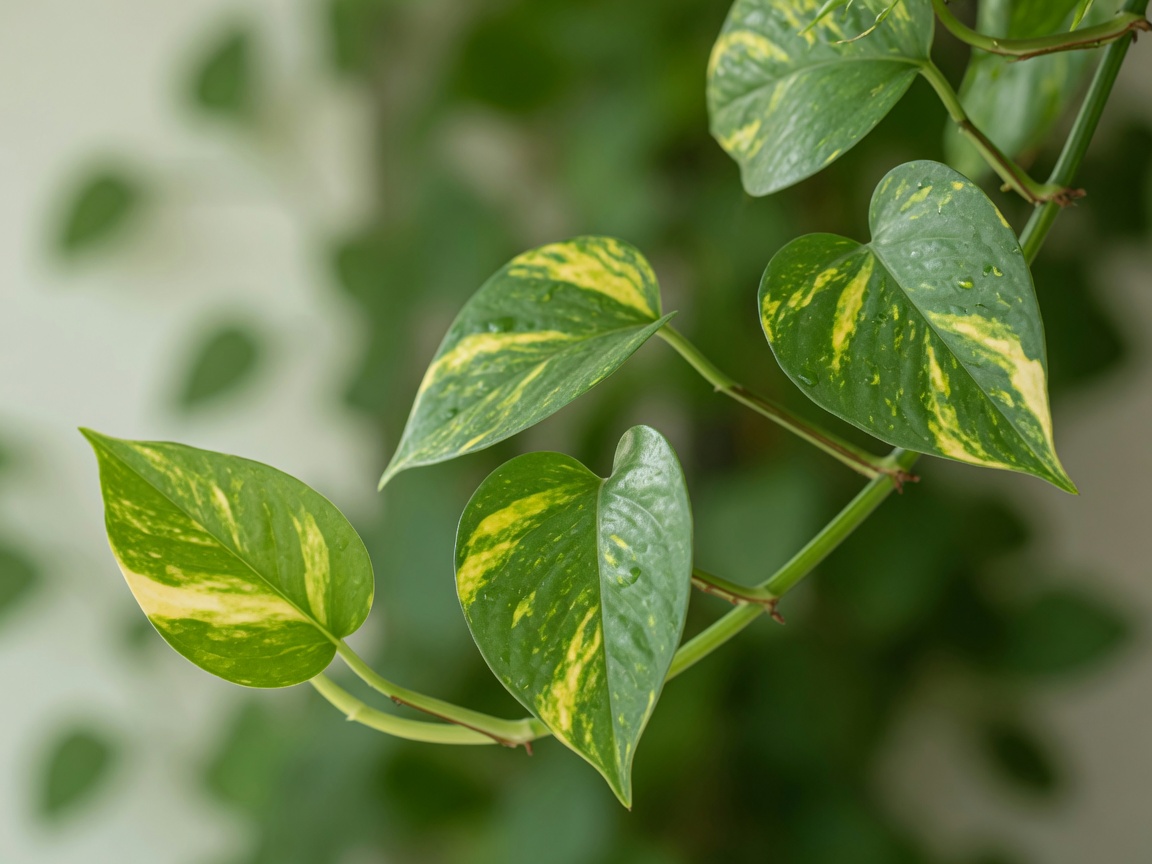
Pothos (Epipremnum aureum) is the houseplant that survives dorm rooms, offices, and beginners. It tolerates low light, missed waterings, and general neglect — then forgives you. But to keep it full and colorful rather than thin and pale, three things matter.
1. Light: Bright Indirect Keeps the Variegation
Pothos tolerates low light, but it prefers bright, indirect light. The trade-off: the more light, the faster it grows and the more variegation (white/cream marbling) it produces. In dim corners it survives but turns mostly green and grows slowly. Direct sun scorches the leaves — keep it out of harsh afternoon light.
2. Water: Top Two Inches Dry
Water when the top 2 inches of soil are dry — usually every 7-10 days, less in winter. Pothos droops dramatically when thirsty and bounces back within hours. The real danger is the opposite: soil that stays wet rots the roots. Yellow leaves almost always mean overwatering, not underwatering. Crispy brown edges mean it got too dry.
3. Fertilizer: Light Feeding, Not Heavy
A balanced houseplant fertilizer at half strength once a month in spring and summer keeps growth steady. Skip it in winter. Pothos in low light barely grows, so it barely needs feeding.
Pruning and Fuller Growth
Pothos grows as a single vine unless you encourage branching. Prune the tips (cut just above a leaf node) and the vine splits into two. Pruned stems can go straight into water to root — pothos is one of the easiest plants to propagate. This is how you turn one vine into a full pot.
Varieties
- Golden pothos — the classic, with yellow-green marbling.
- Marble Queen — heavy white marbling; needs brighter light to keep the white.
- Neon pothos — bright chartreuse-green leaves.
- Snow Queen / Manjula — extra variegated cultivars.
Notes
- Pet warning: pothos contains calcium oxalates — toxic to cats and dogs if chewed.
- Not a philodendron: pothos is often sold as "philodendron," but they're different genera. Care is similar, so it rarely matters for owners.
Have a trailing vine you can't name? The AI Planter analyzer will tell you whether it's a pothos, philodendron, or scindapsus — they look alike but have slightly different needs.