
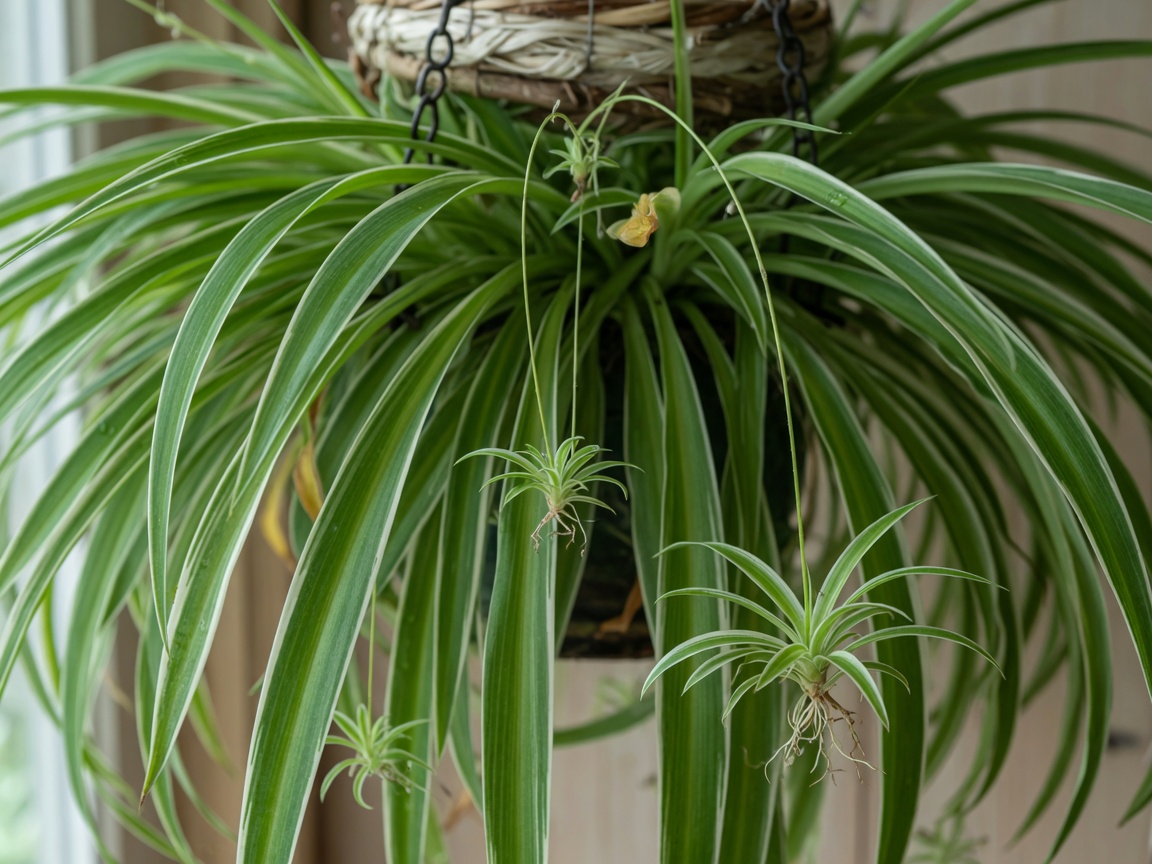
The spider plant is the houseplant that takes care of itself — and then gives you more plants. Learn the few rules that keep it lush, trailing and full of offsets.
Light: bright but not scorching
Spider plants grow almost anywhere, but they look their best in bright, indirect light. In too much harsh afternoon sun the leaf tips scorch; in very dim corners they grow slow and lose their striping. An east or filtered south window is ideal — the classic arching form and white variegation both depend on getting enough light.
Water: let the top inch dry
Water when the top inch of soil is dry — usually every 7–10 days, less in winter. Spider plants have thick, water-storing roots and prefer being slightly dry over soggy. Thick, pale roots at the pot surface are normal; the plant is just filling its pot, which is a sign it wants a bigger one.
Soil and repotting
Any decent all-purpose potting mix works fine. Repot in spring when the roots crowd the pot or push out the drainage holes — these plants are vigorous growers and can double in size each year. A pot only a size or two larger keeps the soil from staying soggy.
The babies: propagating plantlets
The best part of a spider plant is the plantlets (spiderettes) that hang from the mother on long runners. Root them by setting the baby into damp soil while still attached, or snip it off and put the base in water until roots appear (about a week). Then pot it up — you now have a free second plant. See our propagation guide for the full method.
Brown tips and curling leaves
Brown leaf tips are the spider plant's most common complaint and almost never mean disease. Usual culprits: fluoride or chlorine in tap water (use filtered or let water sit overnight), dry air, or letting the soil fully dry too often. Curled leaves usually mean inadequate light or water stress. Snip brown tips off at an angle — it won't hurt the leaf.
Temperature and humidity
Normal room conditions (15–30°C / 60–85°F, 40–60% humidity) are perfect. Spider plants tolerate average home air easily, but a pebble tray or grouping with other plants helps during very dry winter heating.
Good to know
Spider plants are safe around cats and dogs — one of the few popular houseplants that is — and the NASA-recommended list of air-cleaning plants. If you're unsure about a different plant, check its toxicity before bringing it home to pets: plant toxicity and pets.
Get the full care sheet: the spider plant encyclopedia page collects its care profile — light, watering, soil, problems and toxicity — all in one place.